

John Williams composed the music for just three of the eight Harry Potter films. Yet the melody he introduced in 2001 remained part of the franchise until its final moments a decade later.
That’s a remarkable achievement, even for the man behind Star Wars, Jaws, and Jurassic Park.
From Star Wars to Harry Potter, John Williams created some of cinema’s most recognizable musical themes. This WatchMojo retrospective revisits his most memorable scores.
Williams scored Harry Potter and the Philosopher’s Stone (2001), Chamber of Secrets (2002), and Prisoner of Azkaban (2004).
After that, three different composers took over. The films changed directors, became progressively darker, and moved well beyond the childhood adventures that originally defined them. But “Hedwig’s Theme” never disappeared.
In fact, I’d argue that Williams’ greatest contribution to Harry Potter wasn’t simply writing three excellent soundtracks, but creating a musical identity strong enough to survive everything the franchise did afterward.
And the interesting part is that he created it before the first film was even finished.
John Williams Created Harry Potter’s Most Famous Music Before Seeing the Film
“Hedwig’s Theme” has become so closely associated with Hogwarts that it’s difficult to imagine the franchise without it. That wasn’t always the plan.
In an interview with the National Endowment for the Arts, Williams explained that Warner Bros. had asked him to compose music for a promotional trailer before he’d seen the finished movie.
He’d read J.K. Rowling’s book and developed an idea of what its world should sound like. He wrote and recorded the music, the studio built its promotional material around it, and the composition eventually became the series’ defining theme. That’s a fairly extraordinary origin story.
Film composers usually work with footage, shaping their music around the pacing, performances, and editing. Williams essentially had to imagine the musical personality of Hogwarts before seeing how it would translate to the screen.
What he came up with was brilliant because it doesn’t sound entirely comfortable.
The melody is playful and mysterious, but there’s something slightly unsettling beneath it. It suggests discovery and excitement without pretending that the wizarding world is a perfectly safe place.
That distinction is something to keep in mind. Harry Potter might begin with a boy discovering magic, but danger is built into the story from the beginning.
Williams understood that before the franchise had even established its cinematic identity.
Why Hedwig’s Theme Sounds Like Magic
One of the smartest decisions Williams made was giving the melody its distinctive, bell-like sound.
The opening is played on a celesta, a keyboard instrument whose hammers strike metal bars rather than piano strings. Its delicate, shimmering quality became one of the most recognizable sounds in fantasy cinema.
Listen to John Williams’ original “Hedwig’s Theme,” the iconic composition that established the musical identity of Harry Potter and remained recognizable throughout all eight films.
As the Milwaukee Symphony Orchestra explains, the composition also develops through sweeping strings and brass, including musical material associated with Harry’s Nimbus 2000 broomstick.
The orchestration gives the music a wonderful balance between curiosity and adventure.
Personally, I think that’s why the theme works better than a straightforwardly cheerful fantasy melody would have.
It doesn’t simply announce that something magical is happening. It creates the feeling that something extraordinary might be waiting around the corner, and that discovering it could come with consequences.
There’s also a clever contradiction in its name.
Although the piece is called “Hedwig’s Theme,” it became much bigger than Harry’s owl. It represents Hogwarts, the wider magical world, and the sense of wonder that initially draws Harry into it.
By the time the franchise reached its later installments, that association was so firmly established that composers could bring back a few familiar notes and instantly reconnect audiences with the earlier films.
That’s powerful filmmaking. The music was doing narrative work without anyone needing to explain a thing.
Williams Left After Prisoner of Azkaban, but His Musical Influence Remained
The first three Harry Potter films weren’t musically identical, either. The first two, directed by Chris Columbus, leaned into the excitement and spectacle of discovering Hogwarts.
Their scores were richly orchestral, filled with memorable themes and the kind of musical storytelling Williams had already perfected across several decades.
There is one interesting complication: although Williams received the composing credit for Chamber of Secrets, William Ross handled substantial adaptation and conducting duties because of Williams’ busy schedule.
Then came Alfonso Cuarón’s Prisoner of Azkaban. For me, this is where Williams demonstrated just how adaptable his approach could be.
Cuarón’s film abandoned much of the cozy atmosphere of its predecessors. The visual style became stranger, the emotional conflicts more complicated, and the story noticeably more interested in fear and uncertainty.
Williams responded with music that felt considerably different. “Double Trouble” introduced an eerie choral atmosphere, while “A Window to the Past” brought a melancholy quality that suited Harry’s growing understanding of his parents.
There’s also “Buckbeak’s Flight,” one of the most exhilarating pieces in the entire franchise.
The score proved that Williams wasn’t limited to creating whimsical magic. He could follow these characters into more emotionally demanding territory without sacrificing the musical identity he’d established.
That’s partly why his departure after the third film remains such an interesting turning point. He’d already shown that his music could grow alongside Harry.
Still, I don’t think keeping Williams for all eight films would automatically have produced better results. The composers who followed him contributed something valuable of their own.
Three Composers Took Over, and Each Changed Harry Potter’s Sound
- Patrick Doyle — Goblet of Fire (2005)Patrick Doyle became the franchise’s second principal composer with Harry Potter and the Goblet of Fire in 2005.Working with director Mike Newell, Doyle introduced a more dramatic musical approach suited to a film that shifted between tournament spectacle, teenage romance, and increasingly serious danger.His score contains some excellent material, particularly the energetic “Golden Egg” and the emotional “Harry in Winter.”
- Nicholas Hooper — Order of the Phoenix (2007) and Half-Blood Prince (2009)Nicholas Hooper followed with Order of the Phoenix (2007) and Half-Blood Prince (2009), both directed by David Yates.Hooper’s music was frequently more restrained and intimate. Rather than constantly emphasizing the scale of Hogwarts, he often focused on the emotional uncertainty surrounding its characters.His “Dumbledore’s Farewell” remains one of the franchise’s most affecting compositions.
- Alexandre Desplat — Deathly Hallows (2010–2011)Finally, Alexandre Desplat scored Deathly Hallows – Part 1 (2010) and Part 2 (2011), bringing a darker, more atmospheric sensibility to the conclusion.
All three composers developed original musical identities while retaining Williams’ most recognizable contribution. And I think that was the correct decision.
The Harry Potter films needed to change musically because their stories were changing. An eleven-year-old discovering Diagon Alley requires a different atmosphere from young adults preparing for a war.
Simply recreating Williams’ original sound for another five movies would have become repetitive.
The trick was knowing what to preserve. “Hedwig’s Theme” was that connecting thread.
Alexandre Desplat Understood Why the Theme Couldn’t Play Everywhere
Perhaps the best explanation of the theme’s longevity came from the composer who finished the series.
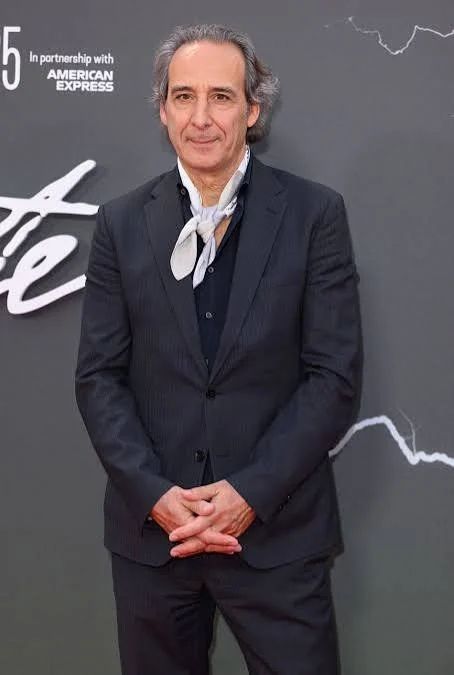
In a 2011 interview about Deathly Hallows – Part 2, Alexandre Desplat discussed why Williams’ music remained essential.
He explained that the theme was closely connected to the characters’ childhood and their early experiences at Hogwarts.
That created an interesting problem for Deathly Hallows – Part 1.
Harry, Ron, and Hermione were away from school, facing danger without the familiar security of their former lives. Returning to the cheerful musical associations of Hogwarts too frequently would have undermined the atmosphere.
Desplat therefore used the theme selectively.
When the story returned to Hogwarts in the final film, however, bringing it back made considerably more sense.
I love that approach because it treats familiar music as something meaningful rather than an easy way to generate applause.
There’s a difference between using an old theme to remind audiences of something they like and using it to deepen a scene’s emotional effect.
Desplat understood the difference. The final film also brought back Williams’ “Leaving Hogwarts” for its concluding sequence, creating a musical connection with the beginning of the series.
John Williams’ “Leaving Hogwarts” brings the Harry Potter story full circle, connecting the final film’s emotional farewell with the music of the first.
After eight films, the story ended partly through the music that had helped introduce it. It’s hard to imagine a more appropriate farewell.
HBO’s Harry Potter Series Now Faces the Same Musical Challenge
The importance of Williams’ contribution has become even more interesting with HBO preparing its television adaptation of Harry Potter.
In January 2026, HBO announced that Hans Zimmer and Bleeding Fingers would create the music for the new series, which is scheduled to premiere on Christmas Day.
That’s an impressive choice. Zimmer has his own history of creating distinctive musical identities for major productions, including The Lion King, Gladiator, and Denis Villeneuve’s Dune films.
But he’s inheriting an unusual challenge.
The familiar imagery of Hogwarts already has a musical identity, and it’s one of the strongest in modern cinema.
I don’t think the television series should simply reproduce Williams’ compositions whenever someone opens a magical door. That would turn the score into an extended nostalgia exercise.
The new adaptation needs its own personality, particularly if it wants to justify retelling a story that audiences already know exceptionally well.
At the same time, completely ignoring the musical legacy would be a bold decision.
Whether any familiar Williams material appears in the finished series or not, Zimmer and his collaborators will inevitably work in the shadow of a theme that has defined Hogwarts for 25 years. That’s not an easy assignment.
John Williams Gave Harry Potter Something Its Films Couldn’t Outgrow
Looking back, the remarkable thing about “Hedwig’s Theme” isn’t merely that it appeared in eight films.
Plenty of franchises reuse familiar music.
What’s impressive is how naturally Williams’ composition survived major changes in directors, composers, visual styles, and dramatic tone.
The theme could introduce a childhood adventure, return as a reminder of innocence, and eventually become part of an emotional farewell.
It was flexible enough to serve the story without losing its identity.
And that’s where Williams’ genius really shows.
He didn’t just compose music that made Hogwarts sound magical in 2001. He created something that could still mean something very different in 2011.
Three films were enough for John Williams to establish one of cinema’s most recognizable fantasy soundtracks.
The other five proved just how good his work really was.