

Dune Messiah takes Paul Atreides from the victorious ruler of Arrakis to an emperor whose religious war has killed billions.
Frank Herbert’s 1969 sequel to Dune is a much darker story about the consequences of Paul’s rise, a conspiracy against his throne, and the terrible price he pays for knowing the future.
It’s also the novel behind Denis Villeneuve’s Dune: Part Three, which arrives in theaters on December 18, 2026.
The film’s release date has also become a major Hollywood talking point, with Dune: Part Three going head-to-head with Avengers: Doomsday on the same December weekend.
The film takes place 17 years after Dune: Part Two and brings back Timothée Chalamet, Zendaya, and Jason Momoa, alongside Robert Pattinson as the shape-shifting antagonist Scytale.
If the first Dune is about how Paul becomes a messiah, the second asks whether anyone should have followed him in the first place.
And Herbert doesn’t give him an easy way out.
Spoiler warning: The following covers the entire plot of Dune Messiah, including major character deaths, the ending, and developments that could appear in Dune: Part Three.
Paul Atreides Has Become the Emperor He Once Feared
Dune Messiah begins 12 years after Paul Atreides defeated House Harkonnen and seized the Imperial throne.
His Fremen followers have carried their holy war across the known universe, conquering worlds in the name of Muad’Dib. Paul now controls an enormous empire, commands religious devotion, and possesses the ability to see possible futures.
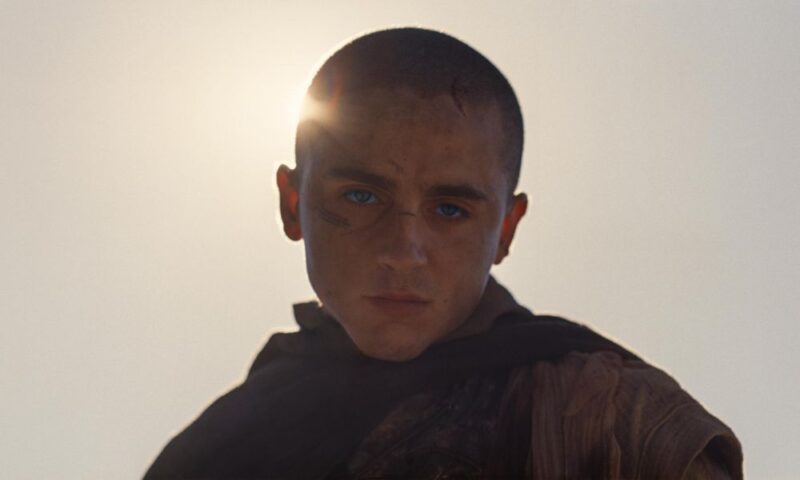
The human cost is staggering.
Paul estimates that his war has killed 61 billion people, devastated entire planetary populations, and destroyed established religions.
He understands the scale of what has happened, even as his followers continue celebrating him as humanity’s savior. That’s what makes the sequel so uncomfortable.
The young man who once feared unleashing a religious catastrophe now sits at the center of one. His prescience allows him to recognize terrible consequences, yet he believes many alternative futures would be even worse.
I find that far more interesting than giving Paul another powerful enemy to defeat. Herbert has already handed him the ultimate victory. The question is what that victory has done to him. And the answer isn’t particularly flattering.
A Conspiracy Forms Against Paul’s Empire
Paul’s enemies haven’t disappeared simply because he conquered the universe.
Several powerful organizations want to weaken or remove him, and their interests overlap enough to produce an unlikely alliance.
The central conspirators include:
- The Bene Gesserit: The secretive sisterhood that once hoped to control Paul through its breeding program.
- The Spacing Guild: The organization whose navigators make interstellar travel possible and whose influence depends heavily on spice.
- The Bene Tleilax: A mysterious society capable of extraordinary biological manipulation, including recreating dead people.
- Princess Irulan: Paul’s political wife, who remains connected to the Bene Gesserit and wants greater influence over the Imperial succession.
The conspiracy’s most dangerous representative is Scytale, a Tleilaxu Face Dancer capable of changing his appearance to impersonate other people.
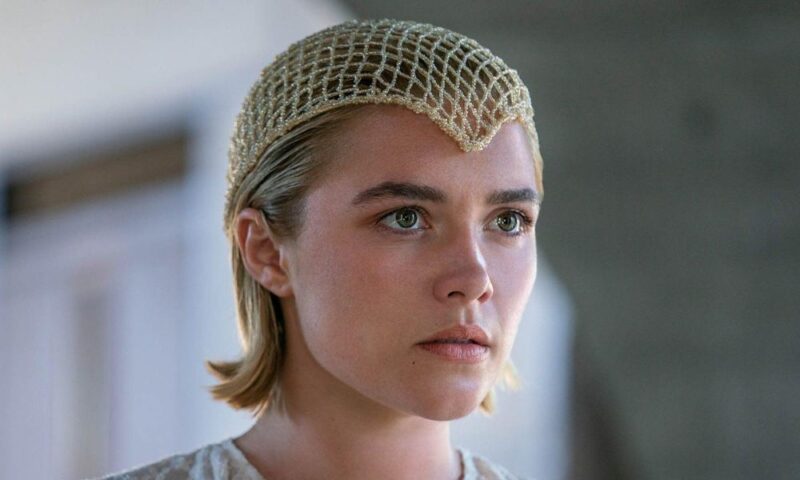
Another participant, the Guild Navigator Edric, helps conceal the group’s activities from Paul’s prophetic sight.
It’s a clever arrangement. Paul can anticipate extraordinary events, but his enemies have found ways to interfere with the very ability that makes him almost impossible to defeat.
Irulan Is Secretly Preventing Chani From Becoming Pregnant
Paul’s marriage to Irulan is political. His real romantic partner is Chani, the Fremen woman who has remained beside him throughout his rise.
Irulan desperately wants to produce Paul’s heir. She also knows that a child with Chani would weaken her position and frustrate the Bene Gesserit’s plans. So she secretly gives Chani contraceptives.
The particularly disturbing detail is that Paul knows about the interference and allows it to continue. His visions have warned him that Chani faces death in childbirth, and he believes delaying her pregnancy will protect her.
His foresight has already started making his personal decisions morally questionable.
Chani eventually discovers the deception, changes her diet to counter the contraceptives, and becomes pregnant. Paul can no longer postpone the future he fears.
Duncan Idaho Returns From the Dead, but Something Is Wrong
One of the strangest developments in Dune Messiah involves Duncan Idaho, Paul’s loyal swordmaster who died protecting him in the original story.
The Tleilaxu present Paul with a ghola, a human recreated from Duncan’s remains.
The recreated Duncan calls himself Hayt.
He has Duncan’s face and physical abilities, but he initially lacks his original memories. The conspirators have also conditioned him for a hidden purpose.
Duncan Idaho returns as Hayt in Dune Messiah, but his resurrection hides a deadly purpose.
Paul immediately recognizes that accepting Hayt is dangerous. He keeps him anyway.
I think Herbert understands something important about grief here. Paul can calculate political risks, anticipate betrayal, and recognize manipulation. None of those abilities makes it easier to turn away someone who looks exactly like a person he loved and lost.
Hayt becomes part of Paul’s household, where his presence unsettles the emperor and attracts the attention of Paul’s sister, Alia.
Alia Has Her Own Problems With Power
Alia Atreides is now a young woman, revered as a religious figure and burdened by the ancestral memories she possessed before birth.
Her abilities make her extraordinarily knowledgeable, but they also complicate her sense of identity.
She develops romantic feelings for Hayt, adding another personal relationship to a political situation already full of manipulation.
Herbert spends considerable time exploring how the Atreides family’s extraordinary abilities isolate them from ordinary human experience. Paul isn’t the only person damaged by the expectations surrounding his bloodline.
An Assassination Attempt Leaves Paul Blind
The conspiracy eventually becomes violent. Paul investigates opposition among the Fremen and visits the home of Otheym, a former loyal fighter who has information about a plot against him.
Shortly afterward, a devastating weapon known as a stone burner explodes. The attack kills and injures people nearby and destroys Paul’s physical eyesight. Ordinarily, that would mean the end of his rule.
Under Fremen tradition, blind people are expected to walk into the desert rather than remain dependent on others. Paul, however, continues functioning as though he can see.
His prescience allows him to anticipate his surroundings with extraordinary precision. By following a future he has already witnessed, he can move through the world without physical vision. There’s something horrifying about that arrangement.
Paul appears more miraculous than ever to his followers, but he’s increasingly trapped inside a future he already knows.
The man worshipped for seeing everything has almost no freedom to change anything.
That’s a much more effective use of supernatural power than simply making a character stronger every time the story needs another spectacle.
Chani Dies Giving Birth to Paul’s Children
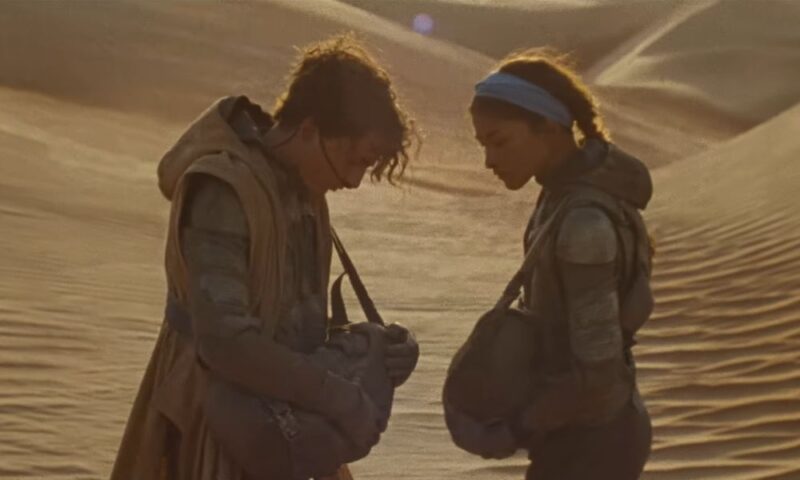
The emotional climax arrives when Chani goes into labor. Paul has spent much of the novel dreading this moment. His prophetic visions have shown him that her pregnancy will end in tragedy. And they prove correct.
Chani dies during childbirth, leaving behind twins named Leto II and Ghanima.
Their birth contains an extraordinary surprise. Paul had not correctly foreseen both children, revealing a significant limitation in his apparent knowledge of the future.
The twins also possess unusual awareness and inherited ancestral memories.
Chani’s death devastates Paul, but it simultaneously triggers the conspirators’ final attempt to destroy him.
Duncan Idaho’s Memories Return
Hayt has been programmed to attack Paul when the emperor is overcome by grief. The command activates following Chani’s death.
However, forcing Hayt to murder someone Duncan Idaho once loved creates an overwhelming psychological conflict. Instead of killing Paul, he breaks through his conditioning. Duncan’s original memories return, restoring his former identity.
The Tleilaxu have successfully demonstrated that a ghola can recover the consciousness of the person from whom it was created. And that revelation leads directly to the conspiracy’s cruelest offer.
The Conspirators Offer to Bring Chani Back
Scytale offers Paul the possibility of recreating Chani as another ghola.
Duncan’s recovery has seemingly proven that a dead person’s memories and personality can return. The Tleilaxu propose using that knowledge to restore the woman Paul loves. Naturally, there’s a price.
Paul must surrender his power and accept the conspirators’ demands. Scytale also threatens the newborn twins, attempting to force the emperor into submission. Paul refuses.
He recognizes that a recreated Chani could be manipulated or conditioned just as Duncan was. Accepting the offer would expose his family and empire to another form of control.
I find this the novel’s most painful decision, precisely because Herbert doesn’t make the temptation ridiculous. Paul has just watched someone he trusted effectively return from the dead.
He has every reason to believe the Tleilaxu might deliver what they’re promising.
Yet recovering Chani would mean placing her existence in the hands of the people who helped destroy their lives. Even grief cannot make that bargain safe.
Paul ultimately kills Scytale, using an unexpected connection to his infant son’s perception to overcome his blindness. The immediate conspiracy is defeated, although Paul’s personal losses cannot be undone.
What Happens to Paul at the End of Dune Messiah?
After Chani’s death and the collapse of his prophetic certainty, Paul is genuinely blind.
He makes a decision that shocks the people surrounding him.
Paul walks alone into the desert, following the Fremen tradition for blind members of their society.
He leaves behind his newborn children, his empire, and the religious identity that has consumed his life. The Fremen presume he will die.
His sister Alia assumes authority as regent for Leto II and Ghanima, protecting the Atreides succession. She also orders the punishment of surviving conspirators.
Irulan, meanwhile, abandons her former allegiance to the Bene Gesserit and commits herself to caring for Paul’s children. Duncan remains with Alia, and their relationship continues.
The ending offers an unusual kind of victory. Paul has escaped the machinery of power, yet his departure strengthens his children’s legitimacy among the Fremen.
His apparent sacrifice becomes another powerful part of the Muad’Dib legend.
Herbert refuses to let him escape the consequences of being worshipped quite so neatly.
Why Dune Messiah Changes the Meaning of the First Book
The most important difference between Dune and its sequel isn’t the scale of the conflict. It’s how we’re meant to understand Paul.
The original novel gives us many familiar elements of a heroic fantasy. A noble family is betrayed, a young heir survives, he discovers extraordinary abilities, and he eventually defeats the people responsible for his father’s death.
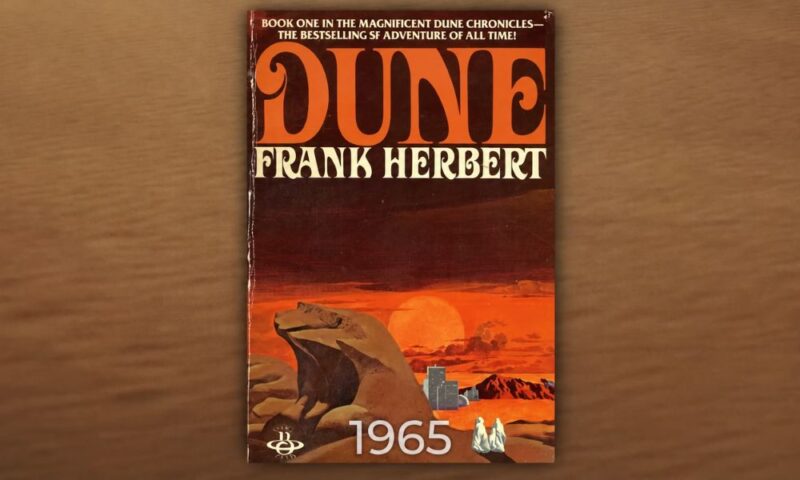
Herbert complicates that story from the beginning, but it’s still possible to become caught up in Paul’s victories.
Dune Messiah makes overlooking the warning considerably harder.
Watch Alt Shift X explain Dune Messiah and the later novels in Frank Herbert’s saga. Contains major book spoilers.
Paul isn’t an innocent victim of a political system he never controlled. He made choices, accepted religious authority, and benefited from the violence committed in his name.
The relationship between power and public obedience also drives Suzanne Collins’s Hunger Games universe. In her exploration of David Hume’s influence on Sunrise on the Reaping, Collins examines why entire populations continue accepting authority even when the system works against them.
His genuine suffering doesn’t erase those decisions.
For me, that’s the sequel’s greatest strength. Herbert can make Paul sympathetic without asking readers to excuse him.
The book also challenges the idea that knowing the future would automatically make someone a better ruler. Paul’s extraordinary foresight has made him increasingly dependent on following predetermined outcomes.
His greatest advantage has become a prison.
How Much of Dune Messiah Will Appear in Dune: Part Three?
Villeneuve’s adaptation is already taking liberties with Herbert’s original story.
Most obviously, the film moves forward 17 years rather than the novel’s 12. The ending of Dune: Part Two also establishes a significant difference in Paul and Chani’s relationship.
In the book, Chani remains Paul’s committed partner despite his marriage to Irulan. In Villeneuve’s film, she leaves after witnessing Paul’s transformation and his decision to marry the princess.
Adapting a beloved science-fiction novel always involves deciding which parts of the original deserve the most attention. Greta Gerwig’s approach to Narnia offers another interesting example, as her decision to begin with The Magician’s Nephew changes how audiences will first encounter C.S. Lewis’s fantasy world.
The film therefore has to address a separation that doesn’t exist in quite the same way in Herbert’s sequel.
The official film synopsis places their relationship at the center of a developing conspiracy, and the official trailer has already established several familiar book elements.
Important confirmed connections include:
- Jason Momoa’s return as Duncan Idaho’s ghola.
- Robert Pattinson playing the shape-shifting Scytale.
- Anya Taylor-Joy portraying the adult Alia Atreides.
- Paul’s struggle with the consequences of his reign.
- The importance of Paul and Chani’s possible children.
Villeneuve has described the third film as a more tense, action-oriented thriller, and Chalamet has acknowledged that the adaptation expands storylines beyond what Herbert explicitly wrote.
That approach is particularly interesting given the novel’s troubled reception. Our closer look at why Dune Messiah became Villeneuve’s final Dune film explores how Herbert’s once-criticized sequel became the foundation for the director’s farewell to Arrakis.
The broad direction is clear, but the novel’s most devastating events shouldn’t automatically be treated as confirmed scenes in the film.
Personally, I think the biggest challenge isn’t recreating Scytale’s conspiracy or explaining Duncan’s resurrection. It’s making Paul’s downfall feel like the consequence of everything audiences celebrated in the first two films.
Dune Messiah works because Herbert is willing to dismantle the heroic image he spent an entire novel building.
If Dune: Part Three preserves that uncomfortable idea, it could deliver something more interesting than another enormous science-fiction finale: a story about a man who conquered the universe and discovered that winning was the beginning of his punishment.