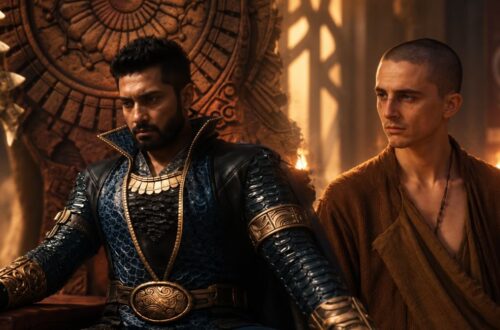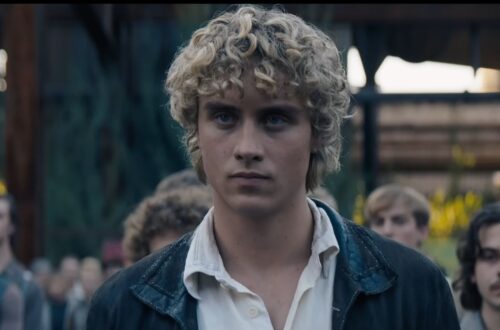

For a novel once dismissed as the “disappointment of the year,” Dune Messiah has landed a remarkably prestigious second job: providing the story for Denis Villeneuve’s final trip to Arrakis.
The director’s Dune: Part Three arrives in U.S. theaters on December 18, 2026, with Timothée Chalamet returning as Paul Atreides, now an emperor dealing with the consequences of his rise.
That release date also puts Villeneuve’s finale in direct competition with Marvel’s biggest upcoming event.
With Dune: Part Three and Avengers: Doomsday sharing December 18, the two studios face an unusually high-stakes battle for holiday audiences and premium theater screens.
And while the marketing promises another spectacular science-fiction event, the source material is famous for doing something a little less crowd-pleasing.
It takes the hero of Dune and asks why everyone was so eager to worship him.
That’s a fascinating way to end a blockbuster series. It’s also a fairly terrifying assignment for a filmmaker who has spent two movies making Paul’s journey look so astonishing.
The Dune Sequel That Disappointed Its Own Admirers
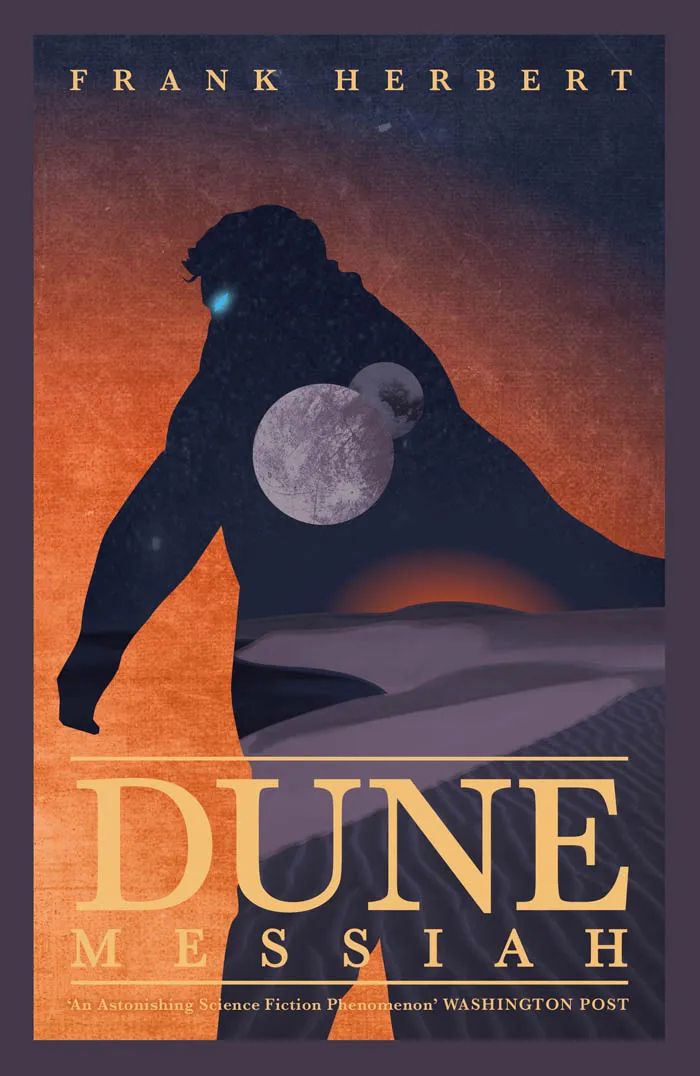
Frank Herbert published Dune Messiah in 1969, four years after Dune. Readers hoping for another round of heroic triumphs found a troubled emperor, political schemes, and a story far more interested in the damage caused by power than in the thrill of acquiring it.
The famous insult has a real history. In his introduction to the novel, Brian Herbert recounts how the satirical magazine National Lampoon dubbed the serialized Dune Messiah the “disappointment of the year.” John W. Campbell, whose Analog magazine had serialized the original Dune, rejected the sequel. He didn’t want a fallen hero.
I can understand the frustration, even if I disagree with the conclusion. Herbert had built an extraordinary world and a protagonist with almost mythic appeal.
Then he followed that success with a book that deliberately made its central character less satisfying to cheer for. That’s a bold creative decision, but bold doesn’t automatically mean entertaining.
Messiah is more cerebral, more constrained, and less immediately accessible than its predecessor. Some of its scenes feel closer to political chamber drama than space adventure. There are valid reasons to find it frustrating.
Still, reducing it to an unsuccessful sequel misses the point. Herbert wasn’t giving readers the same victory again. He was examining the bill that arrived afterward.
Villeneuve Has Already Set Up Paul’s Downfall
The really clever thing about Villeneuve’s Dune: Part Two is that it doesn’t end with a simple, uncomplicated coronation. Paul defeats his enemies, but he also embraces an identity that frightens the person who knows him best.
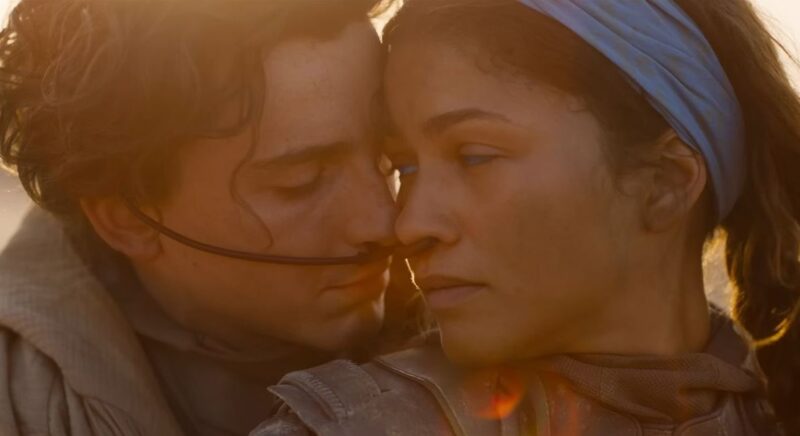
Zendaya’s Chani walks away as Paul claims imperial power and commits himself to a political marriage with Princess Irulan. That decision is much more than a romantic complication. It ensures that the next film cannot treat Paul’s transformation as something that happens offscreen between installments.
For viewers curious about the book’s full story, Lola has already explored what happens in Dune Messiah at Pressvana, including major spoilers. From a filmmaking standpoint, though, the more interesting question is how Villeneuve will make Paul’s unraveling work on screen.
Chalamet has spent two films moving from a displaced young nobleman to someone who can command entire armies. Now he has to make an emperor’s internal collapse just as compelling as his rise. That requires more than an ominous expression and a few expensive explosions.
Chalamet has called this installment the eeriest, and he has the range for it. What’s less certain is whether the movie will give him enough quiet space to show it.
The first trailer for Dune: Part Three offers a glimpse of Paul’s increasingly troubled reign, from his strained relationship with Chani to the conflicts surrounding his empire. Watch the official trailer below to see how Villeneuve is bringing Herbert’s darker sequel to the screen.
A Dark Book Is Becoming an Action Thriller
Villeneuve is not pretending he’s making a page-by-page translation. At a March 2026 trailer event, he described Part Three as more action-packed and tense than its predecessors.
He also called Dune Messiah his favorite book in the series and said this adaptation was among his most personal films.
There’s an interesting contradiction there. Herbert’s sequel is famous partly because it withholds the straightforward excitement readers expected, while Villeneuve is promising a muscular, big-screen thriller.
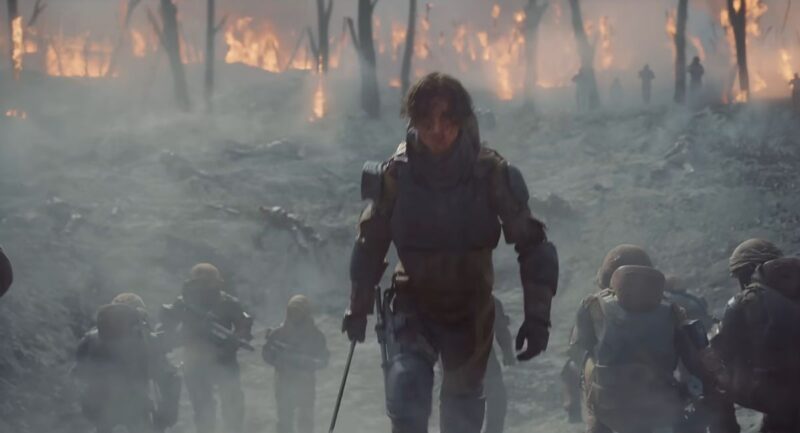
I don’t think that’s necessarily a problem. Books and films create tension differently. A novel can spend pages inside a ruler’s thoughts; a movie needs faces, behavior, conflict, and rhythm. Adding momentum isn’t the same as betraying the material.
Of course, those compromises can also remove the very ideas that make a novel distinctive. Stephen King’s IT is a fascinating case, as our examination of what the IT movies changed from the book reveals just how much cosmic mythology and psychological horror can be lost in translation.
But if every difficult conversation becomes an action sequence, the film could miss the uncomfortable idea that makes Messiah worth adapting. Sometimes the most frightening thing about absolute power is how little room it leaves for anyone, including the person holding it.
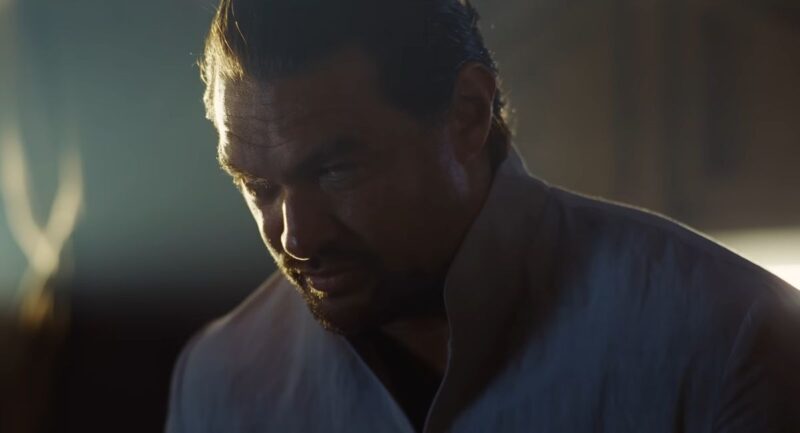
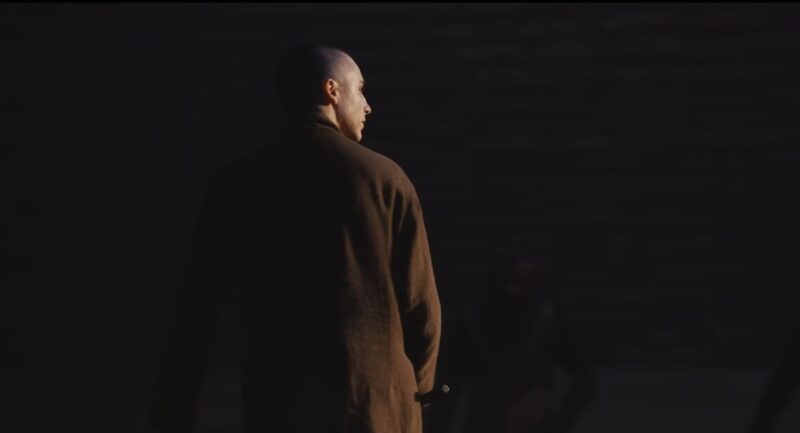
Warner Bros.’ official synopsis places the story nearly two decades after Paul’s seizure of power. That’s a bigger jump than the novel’s 12 years, and the film brings back Zendaya, Florence Pugh, Javier Bardem, Anya Taylor-Joy, Rebecca Ferguson, and Jason Momoa. Robert Pattinson joins as Scytale, a dangerous figure connected to the plot against Paul.
The combination is promising. Pattinson has a gift for making even apparently ordinary dialogue feel slightly unstable. Momoa’s return also gives Villeneuve a chance to turn a familiar face into something much stranger, without relying on another conventional villain showdown.
And there will certainly be spectacle. Villeneuve has shot parts of the film using IMAX film cameras, with Hans Zimmer returning to compose the score. Nobody is going to accuse this production of lacking ambition.
Why This Really Is Villeneuve’s Goodbye
The title Dune: Part Three suggests the final piece of a trilogy. Villeneuve has made a useful distinction, though: his first two films were an adaptation of one novel, while the third has a separate identity.
He has also said he does not intend to direct further Dune installments, even if another filmmaker eventually tackles Herbert’s remaining novels. In other words, this is the end of Villeneuve’s version of the story, not necessarily the end of Dune on screen.
I like that distinction. Franchise filmmaking has become remarkably skilled at postponing endings. Every resolution seems to arrive with an invitation to the next five projects.
Villeneuve has the opportunity to do something rarer: stop because this particular character arc has reached its natural conclusion. The universe can continue without requiring Paul Atreides to keep carrying it.
That makes Messiah a rather inspired choice for his exit. It’s a story fundamentally suspicious of legends, told by a director whose images have helped turn Paul into a cinematic icon.
The Hardest Ending Might Be the Right One
My biggest hope for Dune: Part Three isn’t that it delivers the franchise’s largest battle or its most spectacular sandworm shot. We’ve already had plenty of both, and very good examples at that.
I want Villeneuve to trust the unsettling direction Herbert chose. Make the politics understandable. Let Chani’s perspective matter. Give Paul genuine moments of regret without pretending regret erases responsibility. And allow the film to be uncomfortable when the story calls for it.
The old “disappointment of the year” label is funny in hindsight, but it captures exactly what makes this adaptation interesting. Herbert disappointed some readers because he wouldn’t give them the hero they wanted twice.
If Villeneuve can make audiences understand why, rather than simply admire the scale of the production, he’ll have delivered the ending these films actually need.