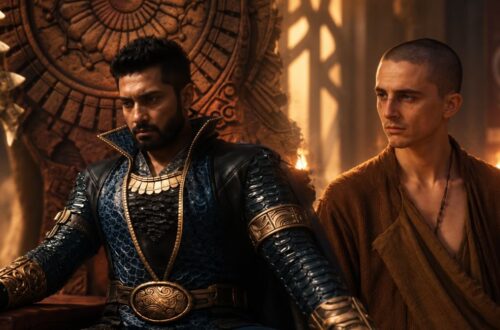

Haymitch Abernathy is the former Hunger Games champion who mentors Katniss Everdeen and Peeta Mellark, but his own victory is one of the more disturbing stories in the entire franchise.
At just 16, he survived the 50th Hunger Games by using the Capitol’s arena force field against his final opponent, causing her own weapon to kill her.
It’s a remarkably clever victory, especially considering what he was up against. Unfortunately, President Snow didn’t particularly appreciate having his carefully engineered death trap turned against him.
Suzanne Collins originally revealed the circumstances of Haymitch’s victory in Catching Fire. Her 2025 novel, Sunrise on the Reaping, expands that story considerably, showing how a rebellious teenager became the bitter, alcoholic mentor audiences eventually meet.
And I think the expanded story makes Haymitch considerably more interesting. His defining achievement wasn’t simply surviving the Games. It was refusing to accept the Capitol’s rules, even when he had almost no chance of changing anything.
Spoiler warning: Major spoilers follow for Catching Fire and Sunrise on the Reaping, including the ending of the 50th Hunger Games.
Who Is Haymitch Abernathy in The Hunger Games?

Haymitch Abernathy is a District 12 victor who becomes the mentor of Katniss and Peeta during the 74th Hunger Games.
Played by Woody Harrelson in the original films, he’s introduced as an unpleasant, frequently drunk man who seems barely interested in keeping his tributes alive. That first impression is misleading.
Haymitch understands the Hunger Games better than almost anybody. He knows how sponsors think, how audiences respond to particular personalities, and how the Capitol manipulates events to create entertainment.
His advice is frequently harsh, although he’s usually more perceptive than Katniss initially realizes.
What makes him interesting is the contrast between his behavior and his intelligence. He’s a remarkably effective strategist who has spent decades trying to escape his own memories.
The original films establish that something terrible happened to him. Sunrise on the Reaping finally shows just how much he lost.
Why Were the 50th Hunger Games Different?
The 50th Hunger Games were the Second Quarter Quell, one of the Capitol’s special anniversary editions of its annual competition.
Ordinarily, each of Panem’s 12 districts sends two tributes, making 24 participants. For the 50th Games, the Capitol doubled that requirement.
| 50th Hunger Games | Details |
|---|---|
| Special event | Second Quarter Quell |
| Total tributes | 48 instead of 24 |
| District 12 tributes | Four |
| Haymitch’s age | 16 |
| Winner | Haymitch Abernathy |
The decision also reinforces something important about the Games. The Capitol controls the circumstances completely, and the districts are expected to accept whatever additional cruelty it introduces.
For Haymitch, the selection is particularly devastating because it takes place on his 16th birthday.
How Haymitch Became a Tribute
Watch Joseph Zada as young Haymitch Abernathy in the official Sunrise on the Reaping preview.
Haymitch guides Katniss through the dangers of the Hunger Games, using lessons learned from his own victory.
One interesting revelation in Sunrise on the Reaping is that Haymitch wasn’t originally selected in the reaping.
District 12’s four chosen tributes are Louella McCoy, Maysilee Donner, Wyatt Callow, and Woodbine Chance.
Woodbine attempts to escape and is killed by Peacekeepers. When Haymitch intervenes to protect his girlfriend, Lenore Dove Baird, he is selected as Woodbine’s replacement.
It’s an important introduction to the younger Haymitch. He isn’t initially trying to become a revolutionary. He’s protecting someone he loves, and the Capitol punishes him for it.
His defiance continues after Louella dies in an accident during the tribute parade. Furious at the Capitol’s treatment of her, Haymitch carries her body before President Snow.
Snow subsequently makes it clear that Haymitch’s behavior will have consequences.
Haymitch enters the arena already marked as a problem. His chances of surviving aren’t determined entirely by his abilities. The people controlling the competition actively want him punished.
What Happened to Haymitch During the 50th Games?
The arena initially resembles a beautiful natural landscape, with meadows, forests, flowers, and mountains.
Unfortunately, much of its natural beauty conceals deadly hazards.
Poisonous plants, dangerous pollen, genetically engineered creatures, and other traps make survival difficult even without the other tributes trying to kill one another.
I like the disturbing logic behind this particular arena. The Capitol has created somewhere that looks almost peaceful, then made ordinary interaction with the environment potentially fatal.
It’s a crueler idea than simply filling an arena with obvious monsters.
Haymitch Attempts to Sabotage the Arena
Rather than concentrate exclusively on winning, Haymitch becomes involved in a plan to destroy the arena’s systems.
Working with Beetee and Beetee’s son, Ampert, he attempts to sabotage the infrastructure controlling the Games.
Haymitch successfully detonates explosives beneath the arena, damaging its systems. However, the backup generator restores its operation, and Ampert is killed by genetically engineered squirrels. The sabotage fails to end the competition.
Yet I think this is one of the most revealing developments in his story. Haymitch isn’t merely another clever tribute attempting to outlast everyone else.
He recognizes that the arena is machinery, built and controlled by people, and therefore potentially vulnerable. That understanding becomes crucial to his eventual victory.
Maysilee Donner Helps Him Survive
Another important character is Maysilee Donner, a fellow District 12 tribute.
Although their relationship begins awkwardly, Maysilee saves Haymitch from attacking Career tributes, and they eventually develop a genuine friendship.
Together, they explore the arena’s perimeter and discover more about the technology controlling it. Maysilee is later killed by genetically engineered birds.
Her death leaves Haymitch devastated, particularly because their relationship has become something considerably more meaningful than a temporary survival arrangement.
It also exposes the ugliness of the Games’ central premise. Even the friendships that help children survive eventually become liabilities in a competition designed to leave just one person alive.
How Did Haymitch Win the 50th Hunger Games?
Haymitch wins because the final surviving tribute, a District 1 Career named Silka, throws an axe at him near the arena’s boundary.
Earlier, Haymitch had discovered that the force field protecting the arena’s edge could repel objects.
During their final confrontation, Silka’s axe strikes that invisible barrier and rebounds, fatally hitting her.
With Silka dead, Haymitch becomes the winner of the 50th Hunger Games.
What makes the victory so memorable is that Haymitch doesn’t defeat his opponent through superior strength or conventional combat skills.
He survives because he understands an environmental feature his opponent doesn’t.
And the irony is excellent. The Capitol’s own technology, installed to maintain control of its carefully constructed arena, becomes the instrument of its final tribute’s death.
Haymitch also makes one last attempt to damage the arena’s systems with explosives after Silka dies, although he fails to destroy them.
His victory is therefore both an extraordinary survival achievement and an incomplete act of rebellion.
I wouldn’t describe it as a straightforward triumph. Haymitch wins the competition, but he doesn’t accomplish his larger goal of ending it.
And Snow has absolutely no intention of letting him enjoy the distinction.
Why Did President Snow Punish Haymitch?
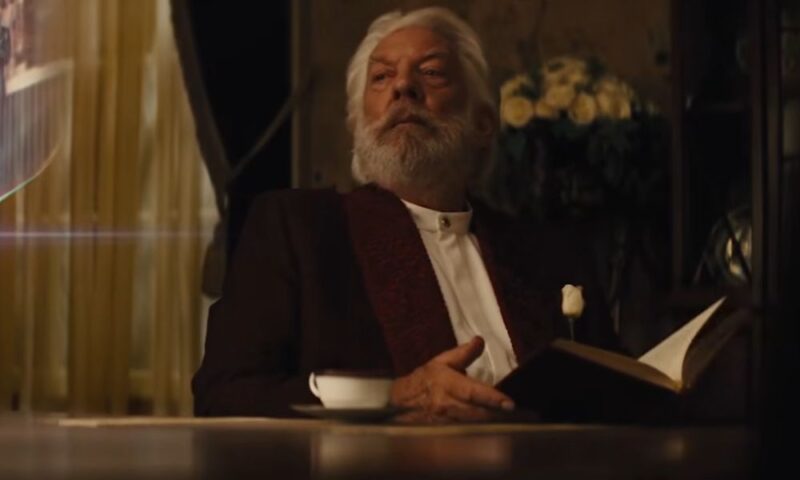
After Haymitch returns to District 12, he discovers that his mother and younger brother, Sid, have been killed in a fire at their home.
The deaths are part of Snow’s retaliation.
His girlfriend, Lenore Dove, is subsequently poisoned through a bag of gumdrops, leaving Haymitch without the people who mattered most to him.
I find the punishment particularly revealing because Haymitch’s actual victory isn’t what makes him dangerous.
Snow can tolerate someone winning the Hunger Games. Victors are useful to the Capitol’s propaganda.
What he cannot tolerate is someone demonstrating that the Capitol’s systems can be challenged.
Collins discusses how the Games function as propaganda, reinforcing the Capitol’s authority over the districts, in a Scholastic interview about the novel.
Haymitch threatens that carefully managed narrative.
His actions suggest that the machinery of oppression isn’t invincible, and Snow responds by making survival itself feel like a punishment.
How Haymitch’s Victory Explains His Relationship With Katniss

Knowing Haymitch’s history changes how I interpret his behavior throughout the original trilogy.
His drinking, cynicism, and emotional distance no longer seem like exaggerated personality traits introduced to make an unpleasant mentor entertaining.
They’re connected to decades of grief and the knowledge that defying Snow can bring terrible consequences to people you love.
His relationship with Katniss becomes particularly interesting in that context.
Both recognize opportunities to challenge the Capitol. Both are willing to take risks. Both understand that winning the Games doesn’t necessarily mean escaping the people who control them.
The difference is experience. Katniss initially believes survival might offer some kind of freedom. Haymitch already knows better.
Still, he helps her, even though doing so exposes him to the same dangers that destroyed his earlier life. That choice is considerably more admirable than his original introduction suggests.
It also gives his character something beyond tragedy. Haymitch eventually contributes to the rebellion that brings down the system he once failed to destroy.
Haymitch’s Story Is Coming to the Screen

The official movie website confirms that Francis Lawrence is directing the adaptation, which takes place 24 years before the original story.
The biggest challenge, I think, will be preserving the personality behind the violence.
Haymitch’s story contains plenty of deadly encounters and elaborate arena hazards, but its strongest material concerns his relationships, his growing resistance, and the terrible consequences of surviving.
His force-field victory is ingenious. It’s also the beginning of everything that makes the older Haymitch such an unhappy man.
And that’s what makes him one of the franchise’s more complicated characters. He won the Hunger Games through intelligence and courage, only to discover that the Capitol could punish him far more effectively outside the arena than inside it.