
Greta Gerwig is beginning her Chronicles of Narnia adaptation with The Magician’s Nephew, the 1955 novel that explains how Narnia came into existence.
It’s the sixth book C.S. Lewis published, the first in the story’s internal chronology, and the exact starting point an 11-year-old fan suggested to Lewis nearly 70 years ago.
Official trailer for Greta Gerwig’s The Magician’s Nephew, Netflix’s upcoming adaptation exploring the creation of Narnia. Video: Netflix.
Starting with Narnia’s creation rather than the familiar wardrobe is an interesting decision.
I can see why Gerwig chose it, especially when another adaptation of The Lion, the Witch and the Wardrobe would inevitably invite comparisons with the 2005 film.
What I find even more interesting, though, is that Lewis himself was surprisingly relaxed about which book readers should begin with.
An 11-Year-Old Asked C.S. Lewis to Settle the Reading Order
In April 1957, an American boy named Lawrence Krieg wrote to Lewis about a disagreement with his mother.
Lawrence was 11 and preparing to read the seven Narnia books again. He thought they should be read in chronological order, beginning with The Magician’s Nephew. His mother preferred the order in which Lewis originally published them.
Rather than continuing the family argument indefinitely, Lawrence asked the author.
Lewis replied on April 23, 1957, with a sentence that would eventually become central to one of fantasy literature’s most persistent debates.
“I think I agree with your order for reading the books more than with your mother’s.”
He explained that the series hadn’t been planned from the beginning. When he wrote The Lion, the Witch and the Wardrobe, he didn’t know more Narnia stories would follow. Even after subsequent books, he repeatedly thought he had finished.
Lewis then added something that complicates the idea of an officially correct reading order. He suggested that the order probably didn’t matter very much.
The correspondence, documented in NarniaWeb’s reading-order history, is charming for an obvious reason. A child asked one of the world’s most famous fantasy writers a question, and the writer took his opinion seriously.
However, I think people occasionally read more certainty into Lewis’s response than he intended.
He agreed with Lawrence’s preference. He didn’t announce that everybody who had been reading his books since 1950 was doing it incorrectly.
Two Ways to Enter Narnia, and Neither Is Quite the Same Experience
The Lion, the Witch and the Wardrobe appeared in 1950. The Magician’s Nephew arrived five years later, followed by The Last Battle in 1956.
Modern editions generally number the books according to Narnian chronology, following a change adopted by publishers decades after the original releases.
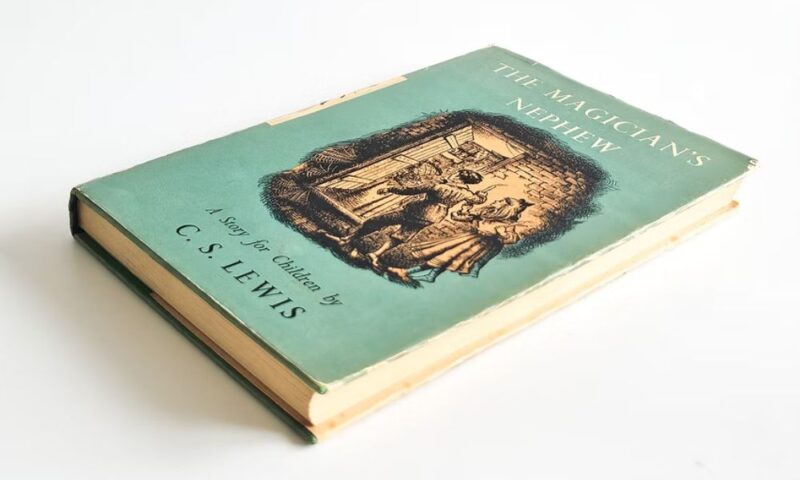
The disagreement comes down to two very different storytelling experiences
| Starting book | What readers encounter |
|---|---|
| The Lion, the Witch and the Wardrobe (1950) | Four children discover an unfamiliar magical world, with its history and rules gradually revealed. |
| The Magician’s Nephew (1955) | Two children witness events surrounding Narnia’s creation, learning where several familiar elements originated. |
Why I Still Prefer the Wardrobe for First-Time Readers
Fantasy is part of my life outside writing about books, and I’ve developed a fairly strong preference about how fictional worlds should introduce themselves.
Let me encounter the mystery before explaining its origins.
The wardrobe works beautifully because Lucy Pevensie doesn’t know what she’s walking into. Neither does the reader. The snow-covered forest, the lamppost, and the talking faun are strange precisely because nobody has explained them beforehand.
Learning how those things came to exist is rewarding later.
The same question of how much readers should know before entering a fictional world comes up with other fantasy series, including Dune Messiah, where understanding earlier events changes the experience of the story.
Charlie W. Starr makes a similar argument in an essay on Lewis’s official website, explaining why publication order preserves the emotional impact of certain discoveries.
I agree with that reasoning. A prequel can be wonderful without necessarily being the strongest introduction. Still, books and movies don’t have to follow identical storytelling rules.
Why The Magician’s Nephew Makes Sense for Greta Gerwig
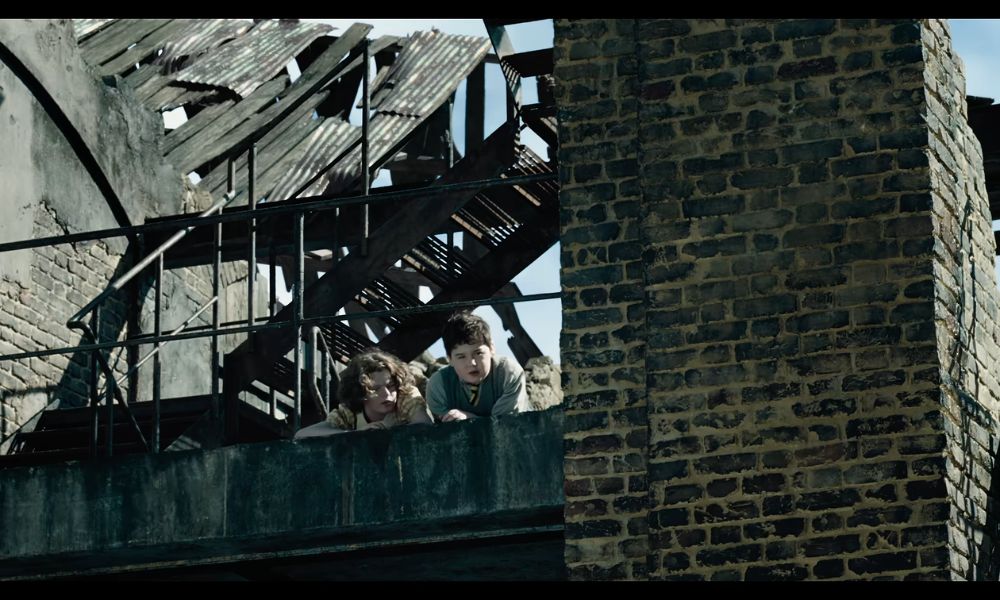
The previous theatrical Narnia series already introduced audiences to the wardrobe.
The Chronicles of Narnia: The Lion, the Witch and the Wardrobe premiered in 2005, followed by Prince Caspian in 2008 and The Voyage of the Dawn Treader in 2010.
Beginning Gerwig’s version with another wardrobe discovery would have invited an obvious comparison before her interpretation had much opportunity to establish itself.
Greta Gerwig discusses her approach to The Magician’s Nephew and offers insight into her vision for Netflix’s new Narnia adaptation. Video: Netflix.
The Magician’s Nephew gives her a different opening.
The story follows Digory Kirke and Polly Plummer, two children whose encounters with Digory’s magician uncle lead them into extraordinary worlds through enchanted rings.
Their adventures include the mysterious Wood Between the Worlds, the ruined world of Charn, and the eventual creation of Narnia by Aslan.
More importantly, the novel isn’t simply a lengthy explanation of where the wardrobe came from.
It deals with temptation, responsibility, destructive power, and the consequences of choices made by people who don’t fully understand what they’re handling.
Those themes give Gerwig something more interesting to work with than an expensive collection of familiar fantasy creatures.
The Creation of Narnia Presents an Unusual Cinematic Opportunity
One of the novel’s most memorable ideas is that Aslan sings Narnia into existence.
Gerwig has specifically identified that image as something that stayed with her since childhood.
In its coverage of the October 13 trailer presentation, the Associated Press reported that Gerwig discussed the spiritual nature of the story and her desire to make a film intended for the largest possible screen.
The trailer uses Led Zeppelin’s “Stairway to Heaven,” an intriguing choice for a fantasy built around music, creation, and spiritual imagery.
I like that Gerwig appears interested in the strangeness of Lewis’s ideas rather than simply reproducing the visual language of earlier Narnia movies.
A world being sung into existence is a difficult concept to visualize without making it feel like another computer-generated creation sequence.
The film needs to make that moment feel miraculous, not merely expensive.
The Cast Is Impressive, but Two Children Have to Carry the Story
Netflix has assembled a substantial cast.
David McKenna plays Digory, with Beatrice Campbell portraying Polly. Daniel Craig appears as Uncle Andrew, Emma Mackey plays Jadis, and Meryl Streep provides Aslan’s voice. Carey Mulligan and Ciarán Hinds are also among the announced performers.
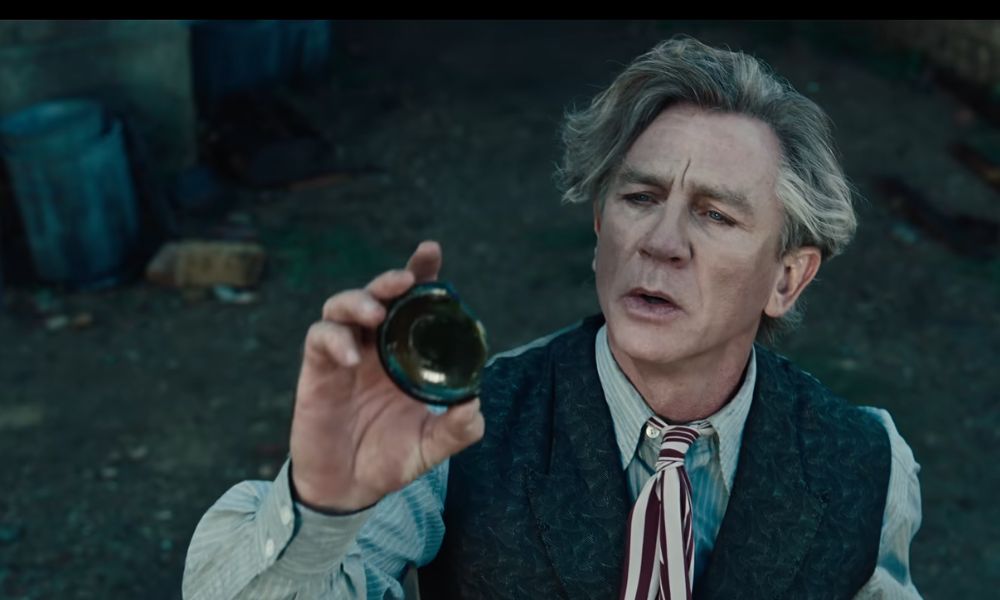
Craig, Mackey, and Streep naturally attract attention. Their characters are important, and the trailer gives audiences plenty to discuss. Yet the younger actors concern me more than the celebrity casting.
Digory and Polly must make extraordinary events feel believable from a child’s perspective. Without that emotional grounding, the film risks becoming a tour of impressive locations rather than a story about two people confronting things far beyond their understanding.
The spectacle can introduce Narnia. The children have to make us care about entering it.
Gerwig’s previous work offers some encouragement. Lady Bird and Little Women demonstrate her interest in complicated relationships, conflicting desires, and characters whose emotional lives don’t conveniently fit the expectations placed upon them.
That experience could be particularly valuable with Digory, whose personal circumstances give the novel much of its emotional weight.
I would rather see Gerwig spend time developing those human stakes than rushing toward the grandest effects sequence.
Gerwig’s Biggest Challenge Is Preserving Wonder Without Explaining Everything
Starting with The Magician’s Nephew creates a curious problem.
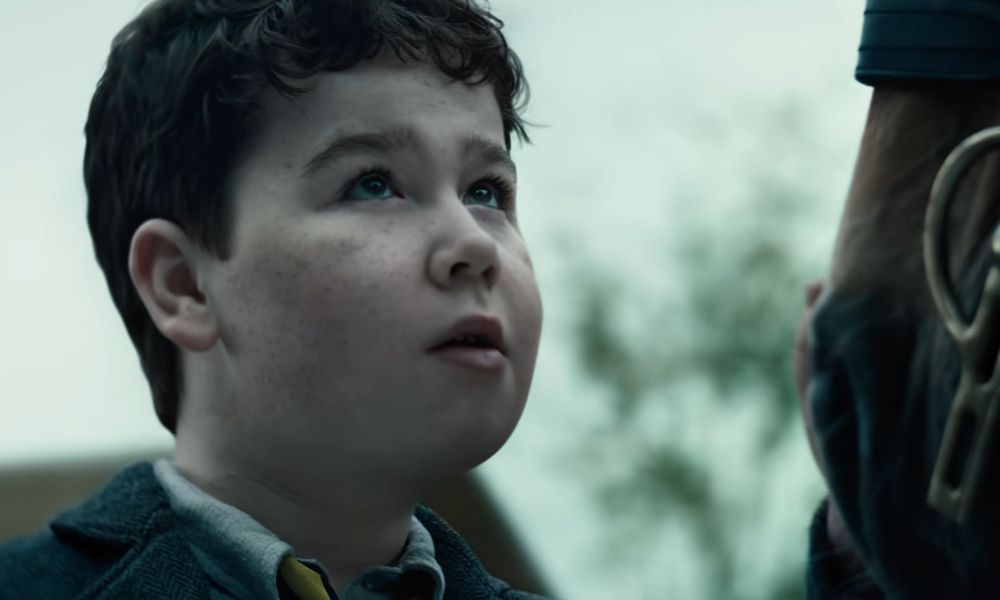
Origin stories naturally answer questions. Great fantasy also needs unanswered questions.
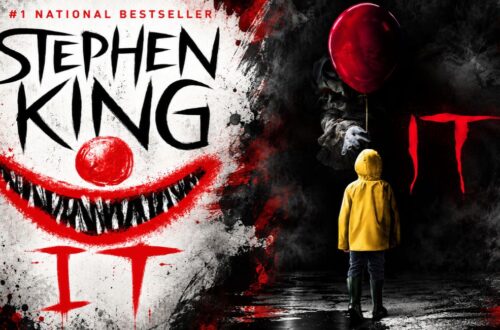
Stephen King’s IT shows what happens when a film adaptation leaves much of a novel’s stranger mythology behind.
As our comparison of Stephen King’s IT novel and its movie adaptations explains, simplifying a fictional world can make a story more accessible while sacrificing some of its most fascinating mysteries.
Other prequels, including Suzanne Collins’s Sunrise on the Reaping, also invite readers to revisit an established fictional world with a different understanding of its characters and history.
Lewis could write a prequel knowing that many readers already understood what Narnia would eventually become.
Gerwig has to make the creation story work for audiences who know the earlier films and for younger viewers encountering the setting for the first time.
Neither audience should feel as though they’re watching an illustrated encyclopedia.
There’s also Lewis’s religious imagination to consider. His Christian symbolism is integral to the novels, particularly Aslan’s role, and Gerwig has openly discussed the importance of faith in her approach.
The Magician’s Nephew explores themes of faith, grief, and creation that give C. S. Lewis’s Narnia story its deeper meaning.
I don’t think an adaptation needs to reproduce every theological implication exactly as readers interpret it. It does need to understand why those ideas matter to the story.
Removing their meaning would be just as limiting as treating every scene as a solemn religious lesson.
Gerwig has an opportunity to find a more emotionally engaging balance.
The Boy’s Suggestion May Have Found Its Best Home on Screen
Lawrence Krieg probably wasn’t thinking about future Hollywood adaptations when he wrote to Lewis in 1957.
He wanted to settle a reading-order argument with his mother.
Nearly seven decades later, Gerwig has chosen the same starting point, though there’s no evidence her decision was inspired by Lawrence’s letter.
I still believe The Lion, the Witch and the Wardrobe offers the stronger introduction for someone opening the books for the first time. The surprise of entering Narnia without knowing its history is too good to surrender casually.
For a new film adaptation, though, I find Gerwig’s decision considerably more persuasive.
Starting with creation allows her to establish a distinct identity and explore parts of Lewis’s imagination that earlier films left untouched.
The real question isn’t whether she has chosen the correct first book.
It’s whether she can make audiences feel the wonder that inspired Lewis to keep writing stories about Narnia long after he thought he was finished.