
I’ll defend Andy Muschietti’s 2017 IT as one of the better mainstream horror movies of the past decade. Bill Skarsgård is a magnificent Pennywise, the young cast actually feels like a group of childhood friends, and several sequences are genuinely frightening.
But here’s something I won’t defend: the idea that those two movies give you anything close to the full experience of Stephen King’s novel. They don’t. Not even remotely.
King’s IT, published in 1986, is a sprawling, frequently brilliant, occasionally ridiculous nightmare involving cosmic entities, psychic battles, centuries of communal violence, and one of the most controversial scenes the author ever put on paper.
Pennywise is practically the least strange thing about it.
That’s what I love about the King novels that get under your skin. They have the appeal of the enormous paperback you weren’t quite old enough to be reading. You enter expecting a monster, and before you know it, you’re somewhere much darker than you anticipated.
IT might be the ultimate example.
Before diving into the stranger details of King’s novel, it’s worth revisiting the version of IT that introduced Pennywise to a new generation.
The official 2017 trailer captures the unsettling atmosphere, childhood fears, and terrifying clown that made the film such a success.
But as you’ll discover, what appears on screen barely scratches the surface of the nightmare King created on the page.
Pennywise Is Not Really a Clown. He’s Something Much Worse
The movies establish that Pennywise is an ancient shapeshifting creature that feeds on fear. That’s accurate, but the book takes the explanation into territory that makes the average supernatural horror film seem embarrassingly unimaginative.
IT is an entity from outside our universe, associated with a dimension called the Macroverse. It existed long before humanity and arrived on Earth in prehistoric times.
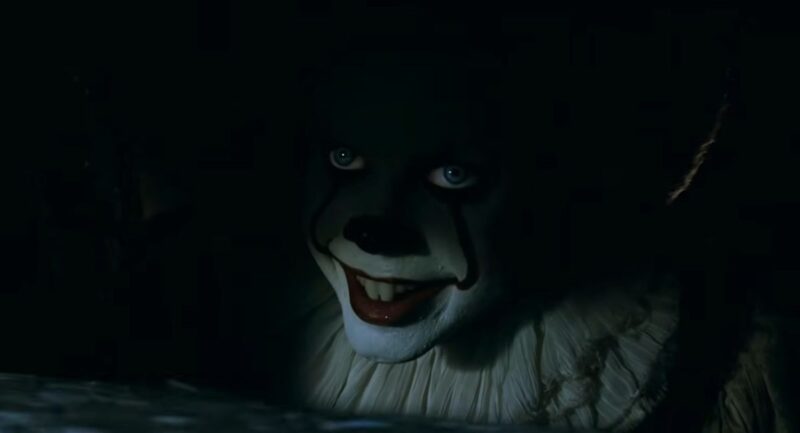
The clown is merely one of its disguises.
And then there’s the Turtle.
Yes, a giant cosmic turtle.
The novel introduces an enormous, seemingly benevolent entity that exists beyond our physical reality and claims to have created the universe during a stomachache. I’m not joking. King actually wrote that.
The Turtle, commonly identified as Maturin in King’s wider fictional mythology, serves as a cosmic counterpart to IT. Its existence suggests an entire supernatural order operating beyond humanity’s comprehension.
This is where the movies become frustrating. Muschietti clearly understood how to make Pennywise visually terrifying, but he largely abandoned the mythology that makes IT such an extraordinary creation.
I understand why. Explaining a universe-creating turtle to an audience that bought tickets to watch a murderous clown is a considerable challenge. But difficult material isn’t automatically disposable material.
The moment King pushes his story beyond conventional horror is the moment it becomes truly fascinating.
The Ritual of Chüd Is Nothing Like the Movie Version
Remember the Ritual of Chüd from IT Chapter Two?
Mike Hanlon explains that the Losers must collect objects from their childhood, place them into a ritual vessel, and use their shared belief to defeat Pennywise.
The ritual fails. Eventually, the group defeats IT by making the creature feel small and powerless. I absolutely hated that ending.
After two enormous movies, the supernatural confrontation essentially becomes a group of adults insulting a monster until it shrinks.
King’s version is considerably stranger. The Ritual of Chüd is a psychic confrontation involving an ancient belief about opposing beings locking tongues and attempting to overwhelm each other through riddles or jokes.
The differences between the novel and IT Chapter Two become especially clear during the Ritual of Chüd. The following video takes a closer look at how the ritual unfolds in King’s original story, what the filmmakers changed, and why the book’s ending is far more complex than what audiences saw on screen.
In practice, Bill Denbrough’s confrontation with IT becomes a battle of consciousness that takes him beyond ordinary reality.
He encounters the Turtle. He experiences the terrifying Deadlights, the closest thing to IT’s true nature that a human mind can perceive.
The stakes are no longer about physically overpowering a creature. They’re about imagination, mental endurance, and whether human consciousness can stand against something that existed before the universe as we understand it.
Is it bizarre? Absolutely. Would it have been difficult to film? Certainly.
But I’d rather watch a filmmaker attempt that madness and fail spectacularly than reduce King’s cosmic nightmare to an oversized clown getting bullied.
Derry Is More Frightening Than Anything Living Beneath It
Here’s where the novel genuinely surpasses the films. King doesn’t simply make Derry a town where terrible things happen. He makes it a town that has learned to tolerate terrible things.
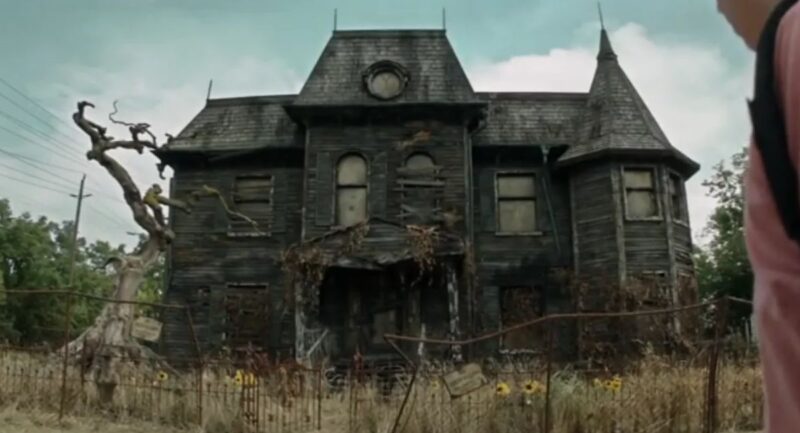
Through Mike Hanlon’s historical research, readers discover a horrifying pattern of violence stretching across generations.
Consider some of the incidents explored in the book:
- The Black Spot fire: A racist group burns down a nightclub frequented by Black servicemen, killing many of the people inside.
- The Bradley Gang massacre: Local citizens participate in a spectacularly violent public shooting of a group of criminals.
- Adrian Mellon’s murder: A gay man is attacked and thrown into a canal, where Pennywise becomes part of the horror.
These events aren’t simply background stories inserted to make the novel longer. They establish something considerably more disturbing: Derry’s ordinary citizens repeatedly participate in cruelty, excuse it, or look away.
IT exploits that willingness to ignore suffering. And that changes how I interpret the entire novel. The creature beneath Derry is terrifying, but the town’s moral cowardice gives it room to operate.
King understands that a supernatural monster becomes far more disturbing when the supposedly normal people surrounding it aren’t particularly decent either.
The films touch on this. They never explore it with anything approaching the novel’s depth.
Some of the Worst Monsters Are Human
Patrick Hockstetter is a particularly unpleasant example. In the 2017 film, he’s largely another member of Henry Bowers’ bullying gang.
In the novel, Patrick is a deeply disturbed child who believes other people aren’t truly real. He has murdered his infant brother and tortures animals by trapping them inside an abandoned refrigerator.
Pennywise eventually comes for him in the form of monstrous flying leeches.
It’s one of the book’s most revolting episodes, and it illustrates an important distinction. King doesn’t need Pennywise to make every chapter horrifying.
The same applies to Beverly Marsh’s abusive father and the casual racism Mike Hanlon experiences.
The novel repeatedly suggests that childhood isn’t the innocent paradise adults prefer to remember.
Children notice cruelty. They experience humiliation, violence, and betrayal. Frequently, the adults responsible for protecting them are part of the problem.
That’s a nastier and considerably more convincing understanding of childhood than most Hollywood horror movies are prepared to offer.
And Yes, There’s That Infamous Sewer Scene
We can’t discuss the strangeness of IT without addressing the passage that has generated arguments for decades.
After the Losers initially confront IT as children, they become lost in the sewers. Beverly has sex with the six boys, and King presents the encounter as a means of restoring their connection and helping them find their way out.
It’s an appalling creative decision. I’ve seen the explanations about childhood ending, innocence disappearing, and the group crossing into adulthood together.
I understand the intended symbolism, but I still think the scene is indefensible.
There are countless ways to dramatize the transition from childhood to adulthood without involving a sexual encounter between children.
And no, calling something symbolic doesn’t automatically make it good writing. This is one instance where the filmmakers were absolutely right to abandon the source material.
King’s willingness to follow an idea into uncomfortable territory produced some remarkable fiction. It also occasionally produced material that needed a much stronger editor. Both things can be true.
The Biggest Loss Is How the Novel Treats Memory
One of my favorite aspects of IT has almost nothing to do with Pennywise. It’s the idea that the Losers gradually forget Derry after leaving.
Their friendships, traumas, and extraordinary experiences begin slipping away. When Mike calls them back as adults, they’re forced to reconstruct lives they can barely remember.
King interweaves the childhood and adult timelines, making the past feel as immediate as the present.

That structure is essential. The monster returns, but so does everything the characters believed they had escaped.
I think this is where King’s excess becomes an advantage rather than a weakness. He spends so much time establishing the Losers’ friendships that their fading memories feel like a genuine loss.
A novel can linger over those little moments. It can make an afternoon in the Barrens feel as important as a confrontation with an ancient evil.
The movies have touching moments, especially the first one, but they can’t replicate that cumulative effect.
It’s a problem familiar to ambitious literary adaptations. As our examination of the story behind Dune Messiah illustrates, the material that complicates a novel is often precisely what makes it worth adapting.
Remove too much, and you may preserve the events while losing what they mean.
Stephen King’s IT Is a Mess. That’s Part of Its Greatness.
I won’t pretend IT is flawless.
It is too long in places. Certain digressions test your patience. Some scenes are genuinely hard to defend, and King occasionally seems incapable of abandoning an idea once it enters his head.
But I’ll take that over a perfectly calculated horror story that never risks becoming ridiculous.
The 2017 film is effective because it understands the children. IT Chapter Two struggles because it tries to turn the adult story into another collection of scares and an enormous CGI confrontation. The novel is playing a different game entirely.
It’s about the terrifying possibility that evil is woven into the places we call home, that childhood never completely releases its grip on us, and that growing older might involve forgetting the people who once mattered most.
And yes, it also features an ancient cosmic creature battling children with the help of a giant turtle.
Somehow, King makes those ideas belong in the same book.
That’s the version of IT I wish more people knew.
The movies gave us an unforgettable Pennywise.
The novel gave us an entire universe worth being afraid of.